
The ultimate matter
Christopher Volpe renders light and shadow from tar

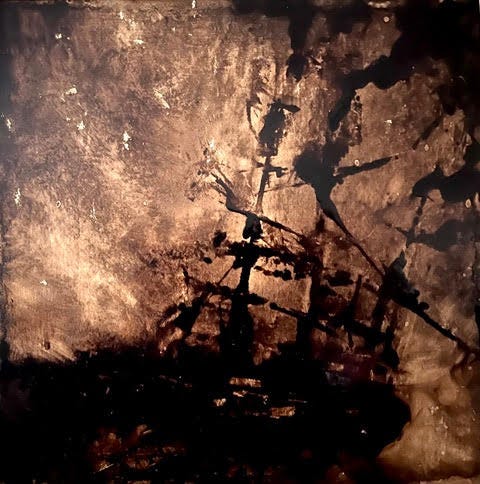
In this installment of Work In Progress, a regular feature in which an artist takes us through the creation of one piece from beginning to completion, Christopher Volpe explains how he made his tar painting “Nor’Easter #5.” It’s part of his “Loomings” series at Cove Street Arts through Jan. 27, which explores Moby-Dick and the oil trade. “Melville created art in the mid-1800s that raises profound questions about the story of humanity itself and still serves as a devastating critique of the nation we’ve made,” Chris says on the exhibition website. "
A final reminder: Ocean in a Drop’s pay wall goes up tomorrow – Wednesday, Jan. 24, and Work in Progress posts will be behind it. For more details, go to this link.
Chris writes: Roofing tar is the primary medium in my series of paintings “Loomings,” so titled after the first chapter of Moby-Dick. I use tar because it’s something like an alchemical substance, a chthonic prima materia. If painting is about reaching toward the immaterial through the material, tar is the ultimate matter – tar is the earth, organic and deathly, something dark and oozy that pools and drips like black blood from millions of years of the prehistoric earth, and it is emblematic of our time in history and our future as a species. The Pequod was on a commercial quest for oil too, which of course did not end well for Ahab and his crew.
Even though I grew up on Long Island next to an oil tank holding facility, I’ll never get used to the smell; it’s so obviously toxic– the very definition of a volatile organic compound – so a respirator rated for VOCs is essential. I work with it outside whenever I can.
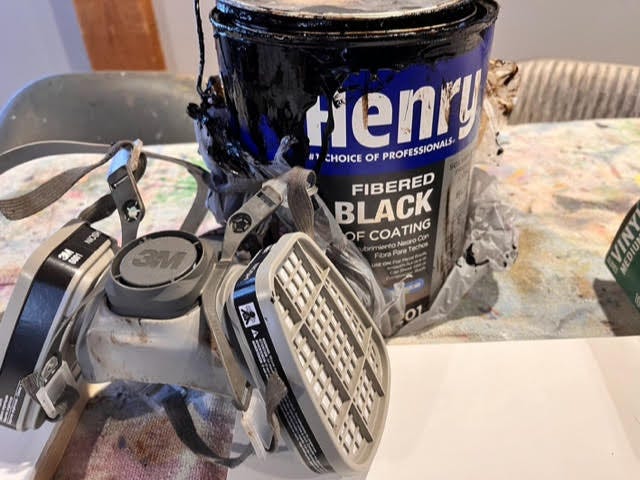
The tar I use doesn’t come from the ground directly; it’s an industrial petroleum byproduct of refining fossil fuels. Loews and Home Depot sell it as “Wet Patch” or “Fibered Black Coating.” It comes in a one-gallon can you pry the lid off of to open. It looks like a glossy, impenetrable metallic black, but when thinned it reveals warm, tobacco-like sepia browns.
I mix the tar with an alkyd for two reasons – one to get it thin enough to work with, and two so that it will fully dry and stabilize on the substrate. I’ve tried painting with it on linen, cotton canvas, metal and wood. For my ground, I’ll either use acrylic gesso or auto paint primer.
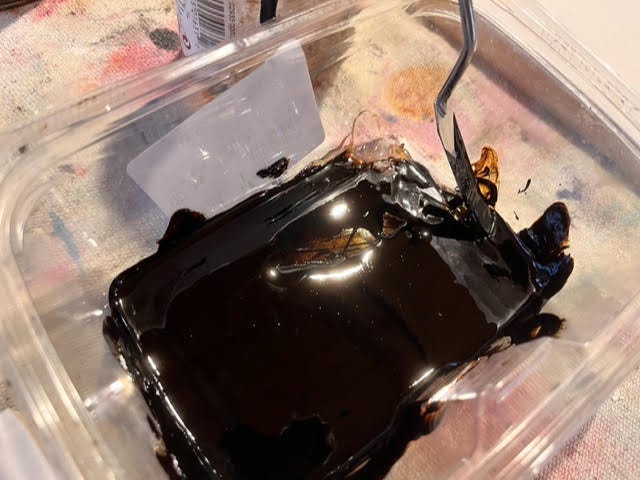
I mainly work with it in a subtractive manner, covering the entire surface and letting it sit for a while to set up before removing tar with wadded-up shop towels.
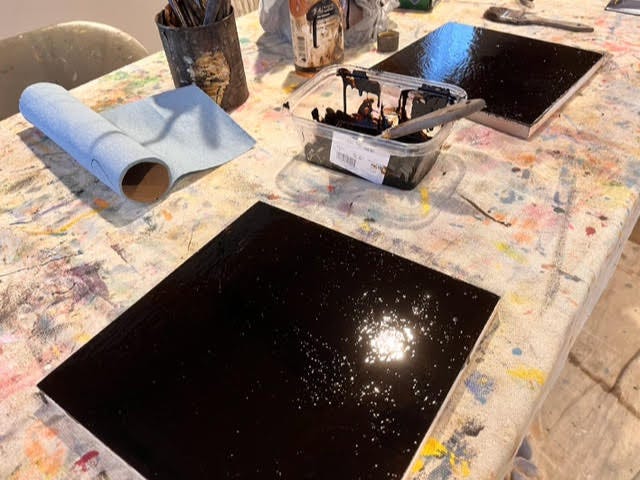
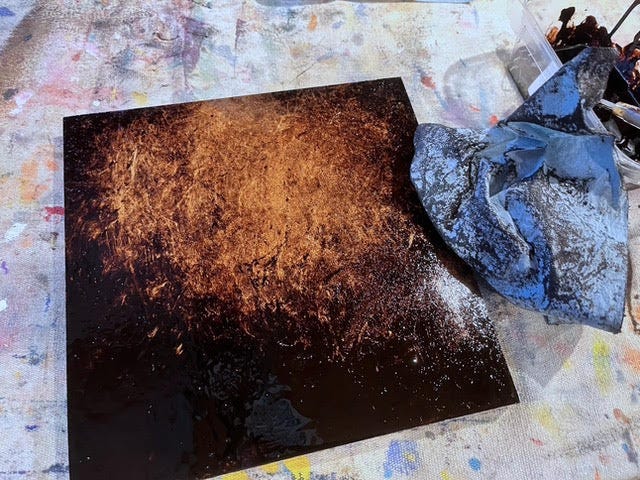
After the initial wipe-away, I’ll go back in and draw with the tar. I use a palette knife as my primary tool. It’s possible to do fine detailed work with tar, but for me that would defeat its purpose as a signifier of the inscrutable (Ahab’s word), all-consuming crawling chaos it stands in for.
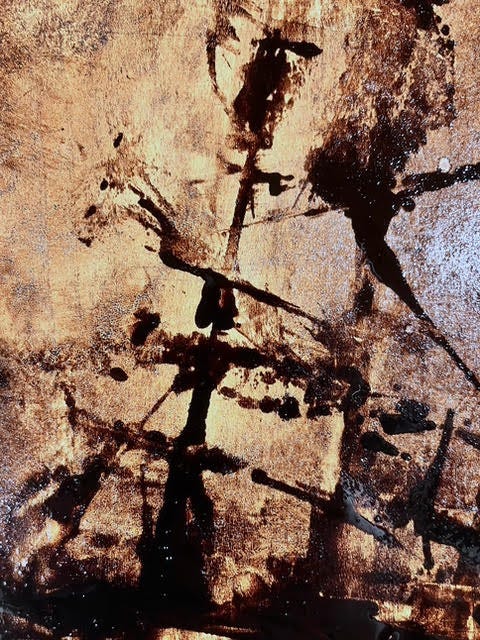
It’s also possible to mix oil paints with the tar, and I often do this with titanium white. But I think too much color would pull away from the core sense of “being and nothingness.” It seems to work for what Clement Greenberg, speaking of Pollock, called “that American chiaroscuro which dominated Melville, Hawthorne, Poe.”
Late to the party, here, but so impressed by the connections Volpe made with oil, tar, the quest for something that will support our desires, and Melville’s classic that is full of desire and quests.
I’ve used liquid asphaltum in my work because it is a ubiquitous printmaker’s medium, so Volpe’s use of tar does not surprise me, but his content and connections of signifiers that speak across time, is a surprising delight.
Wish my friend Plush were alive to read this. He was a deep reader of Melville--especially Moby Dick. the parallels between Volpe and Melville are fascinating.